Roll-up and sectional commercial doors kept moving for the shops and bays along US 1 and the Turnpike
A commercial door that will not close is a security problem by nightfall and a lost morning by eight. Rolling steel curtains, sectional dock doors and high-lift doors with their operators are serviced, repaired and replaced, with the same written price before work and the same answer to the phone at any hour.
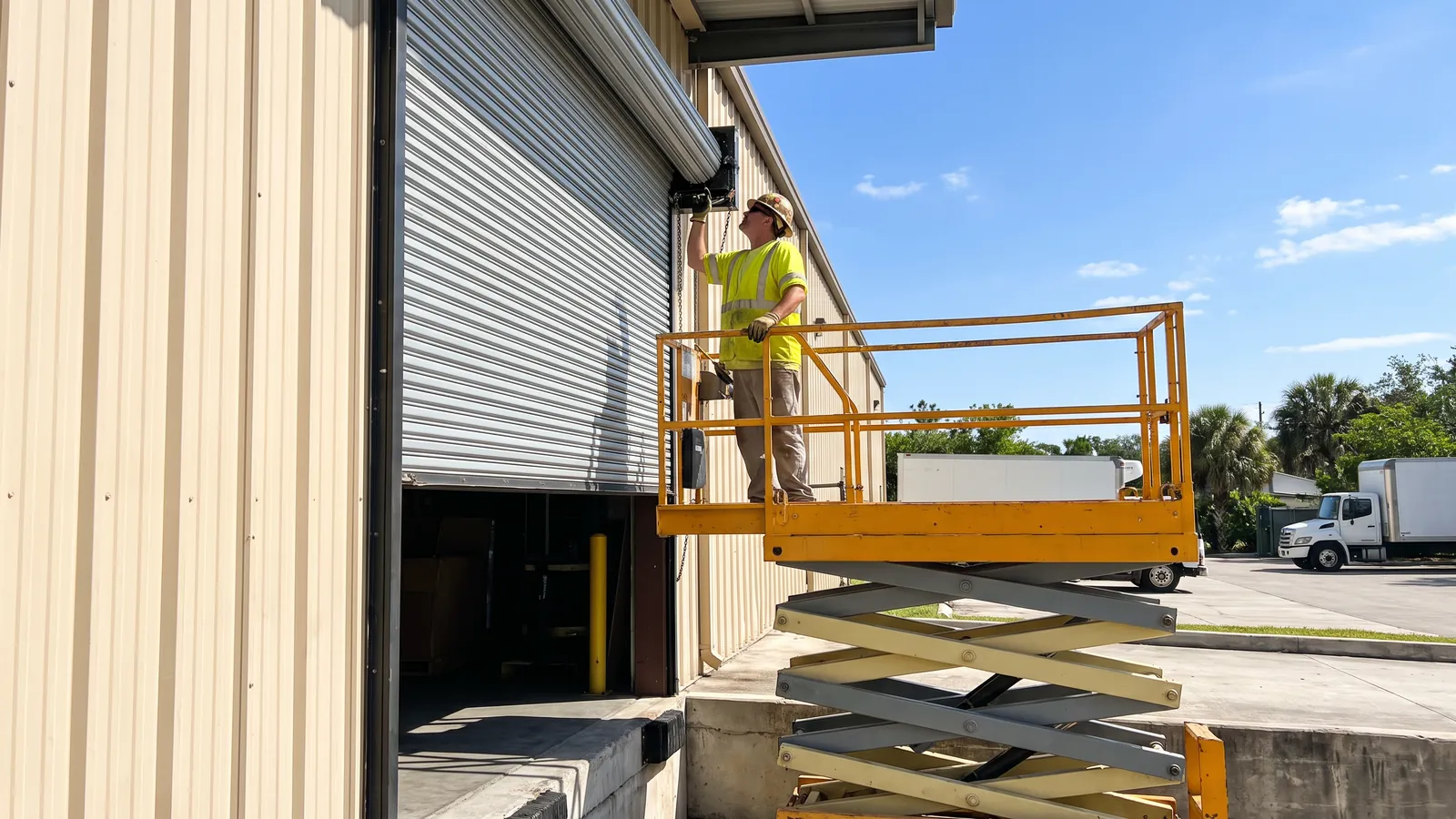
The commercial door stock on the Treasure Coast is spread between the industrial parks off Glades Cut Off Road and Midway Road, the shop and storage units along US 1 and Port St. Lucie Boulevard, the distribution buildings near the Turnpike and I-95 interchanges, and the marinas and boat-storage barns along the river and the inlet. Rolling steel curtain doors dominate the storage and warehouse buildings; sectional doors on high-lift or full-vertical track handle the shops and dock bays with taller openings; and the boat barns run some of the biggest sectional doors in the county, with operators and springs to match. Each has its own failure habits: slats and guides on rolling doors, cables and high-lift track on sectionals, and chain hoists and operators on everything.
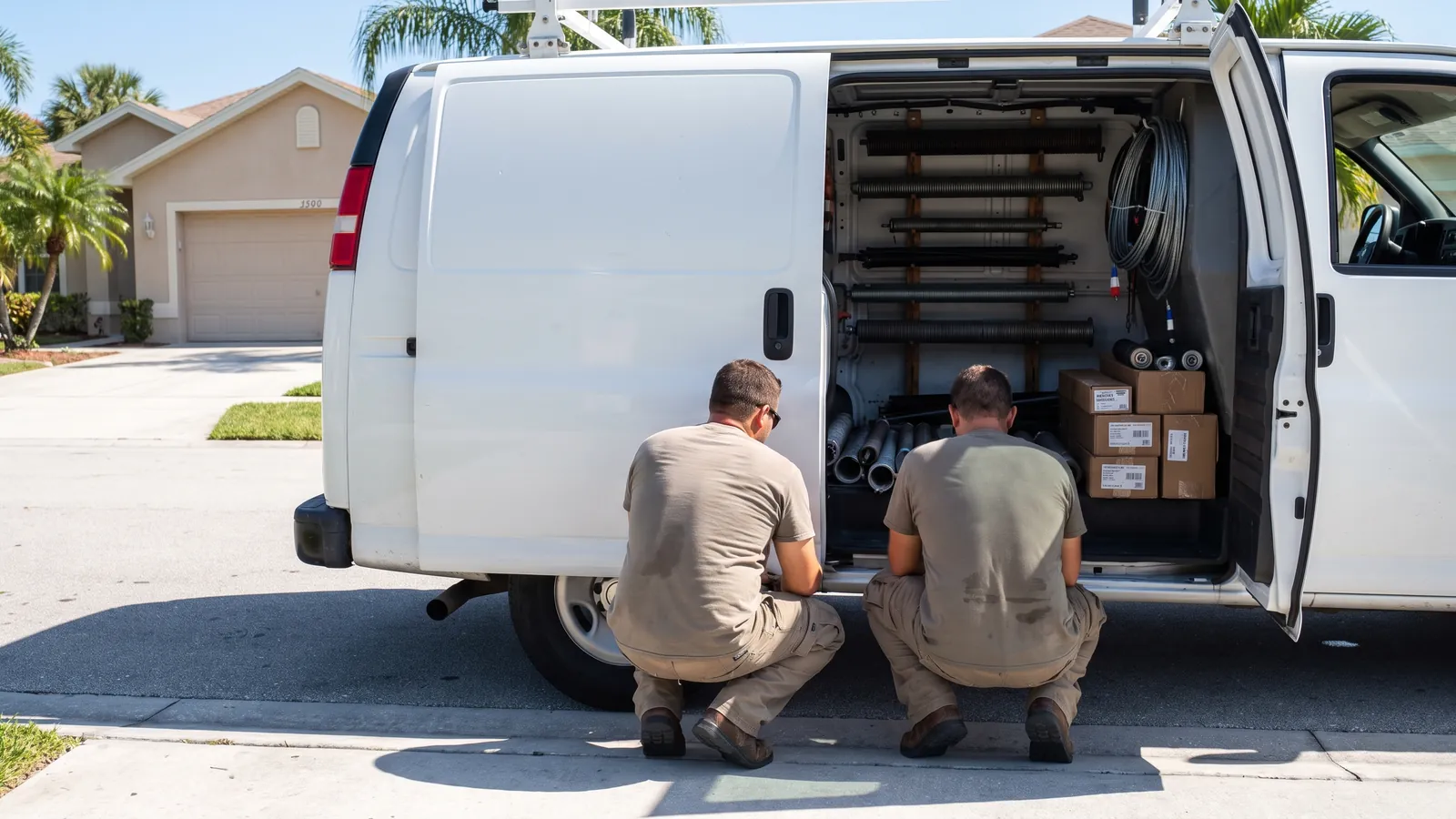
Commercial springs and operators are a different scale from residential. A rolling steel door's spring lives inside the barrel and is sized for thousands of cycles a year; a 12-by-14 sectional door on a shop may carry three or four torsion springs. Operators are jackshaft or trolley units with chain hoists for manual override, and current standards require monitored entrapment protection, meaning photo-eyes and in many installations a monitored safety edge on doors that run on momentary-contact controls. Older operators are brought up to that standard when they are serviced. New commercial doors, like residential ones, are permitted and must be rated to the design pressure for the opening, which on a rolling door sets the slat gauge and the wind locks.
Most commercial customers end up on a service schedule, quarterly or by cycle count, with a written report on every door. That is the cheapest way to keep a dock door out of the emergency column, and it gives the facilities manager a paper trail for the landlord or the insurer. After-hours calls for a door that will not secure are answered the same way as residential emergencies: the next free technician, and the door closed and locked that night even if the full repair waits for daylight and a part.
What the visit covers
Rolling steel, sectional and high-lift
Curtain doors, sectional dock doors and high-lift or full-vertical track doors serviced and replaced, with slats, guides, cables and track stocked.
Operators and controls
Jackshaft and trolley operators repaired or replaced, chain hoists serviced, three-button stations, loop detectors and remotes installed.
Entrapment protection brought current
Monitored photo-eyes and safety edges fitted to older operators so they meet the current standard.
Commercial springs
Barrel springs on rolling doors and multi-spring torsion sets on sectionals, sized to the door's weight and cycle count.
Permitted, rated replacements
New doors specified to the design pressure for the opening, with wind locks and gauge to match, permitted by the City or County.
Service schedules with reports
Quarterly or cycle-based maintenance with a written report per door for the facilities file.
What commercial roll-up doors runs on the Treasure Coast
| Work | Usual range | What moves it |
|---|---|---|
| Commercial trip and diagnosis | $150 – $250 | Credited against the repair |
| Rolling door spring or barrel service | $450 – $1,200 | Door size and curtain weight |
| Sectional door torsion springs, commercial set | $500 – $1,400 | Multi-spring sets |
| Operator repair or board | $250 – $650 | Jackshaft and trolley units |
| New jackshaft operator with hoist, installed | $1,400 – $3,200 | Includes monitored photo-eyes |
| Slat, guide or track section | $200 – $600 per section | |
| New rolling steel door, 10×10, installed | $3,500 – $7,500 | Wind-rated, permitted |
| Quarterly service, per door | $120 – $220 | Written report included |
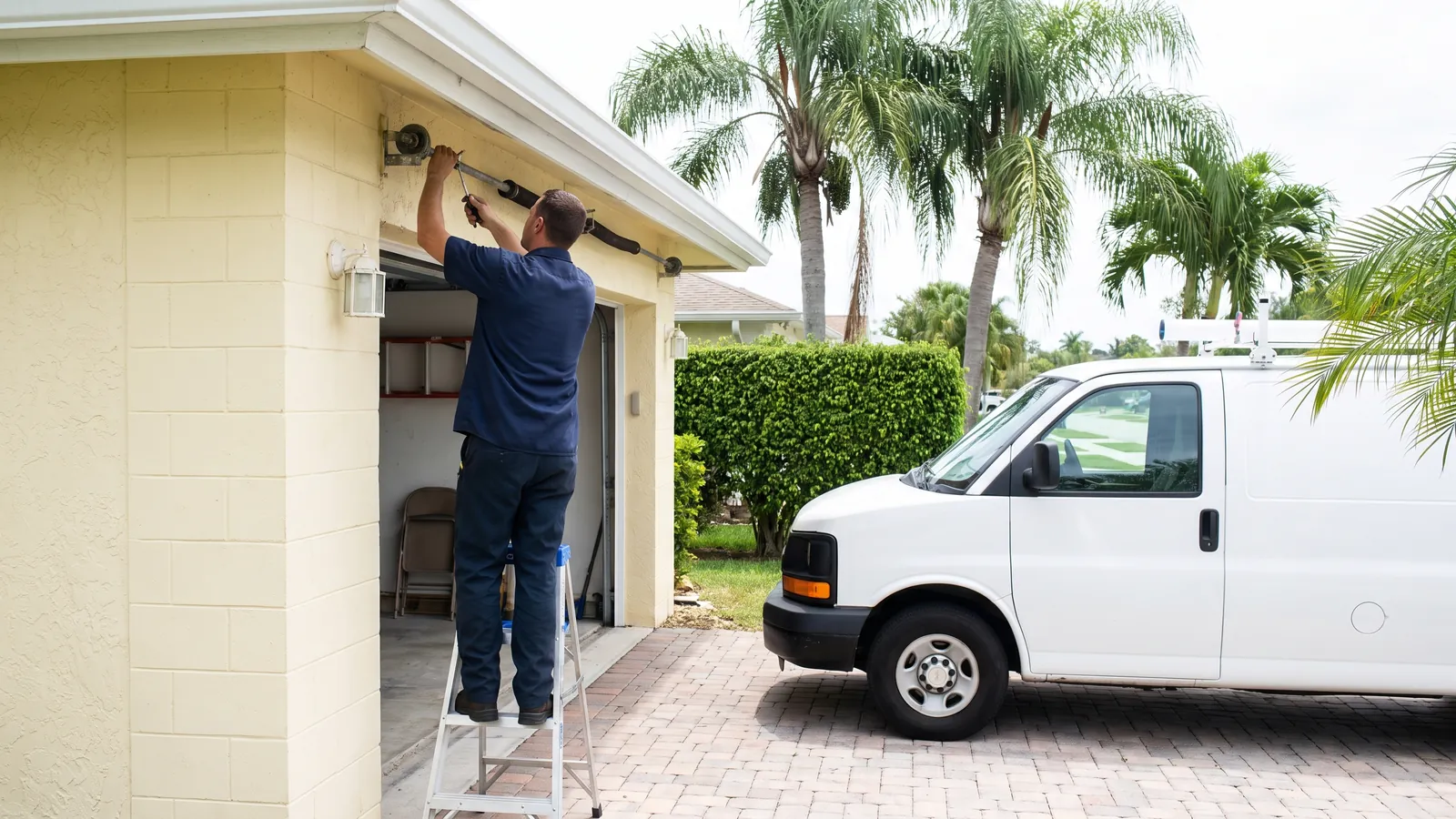
Ranges are 2026 figures for St. Lucie and Martin counties, meant for budgeting. The number that counts is the one the technician writes at your house before any work begins, with parts and labor on separate lines. Quotes for new doors and openers are free and hold for 30 days.
Jobs like yours
Asked by homeowners here about commercial roll-up doors
Do you service doors after hours?
Yes. A commercial door that will not close is treated as an emergency: the next free technician, and the door secured that night even if the full repair needs a part in daylight.
Can you handle the big doors at boat barns?
Yes. Large sectional and rolling doors on dry-stack storage and boat barns, with the multi-spring sets and operators they need, are part of the regular work along the river and the inlet.
What is a monitored safety edge and do I need one?
A pressure-sensing strip along the bottom of the door that is supervised by the operator, so the door stops and reverses on contact and will not run if the edge fails. Current operator standards call for monitored entrapment protection on doors with momentary-contact controls, and we bring older operators up to it during service.
Do new commercial doors need a wind rating?
Yes. Every new door is specified to the design pressure for the opening, and on a rolling steel door that sets the slat gauge and the wind locks. The permit reviewer checks the figures.
Can you put our buildings on a maintenance plan?
Yes, quarterly or by cycle count, with a written report for each door covering springs, cables, slats, guides, operators and safety devices. It is the cheapest way to avoid an emergency call and it gives you paperwork for the insurer.