A yearly garage door tune-up in Port St. Lucie, timed for the salt air and done before August
A door that is tuned once a year runs quietly, lasts longer and does not fail the week before a hurricane. On the Treasure Coast the tune-up is also a rust inspection, because salt finds the springs, cables and bottom brackets long before anything looks wrong from the street.
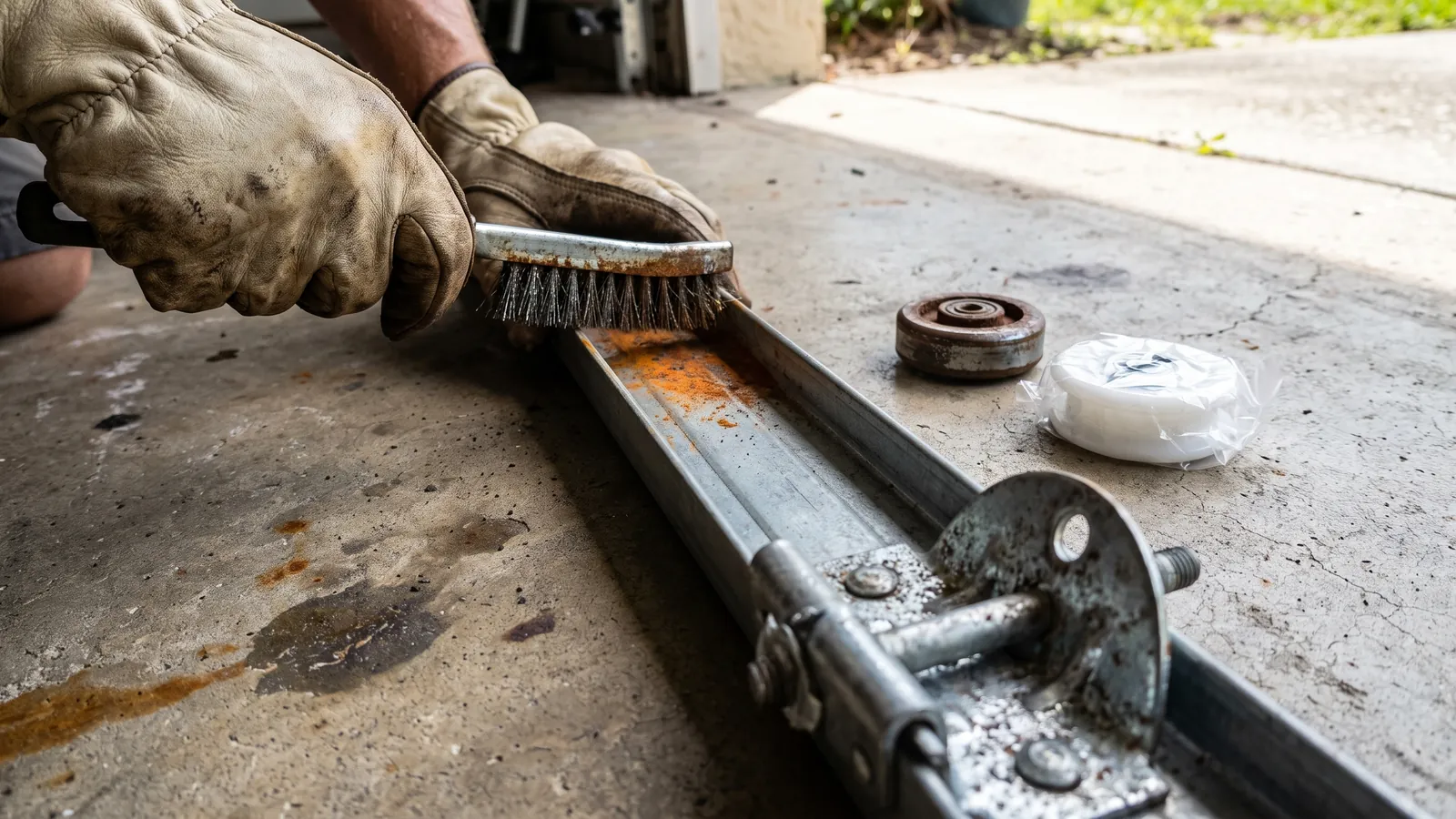
A garage door tune-up is a forty-five-minute visit with a fixed checklist. The technician disconnects the opener and lifts the door by hand to check the balance; a door that drifts down or shoots up has springs that need adjusting. Every roller, hinge, bearing and the spring itself is cleaned and lubricated with a garage-door lubricant, not a penetrating spray, which strips the grease that is already there. The cables are run through gloved fingers looking for broken strands and the bottom brackets are examined for rust. Bolts and lag screws into the header and the track brackets are tightened. The weather seal along the bottom and the stop molding on the sides are checked for gaps. Then the opener is reconnected, the travel and force limits are reset, and the photo-eyes and the contact reverse are tested.
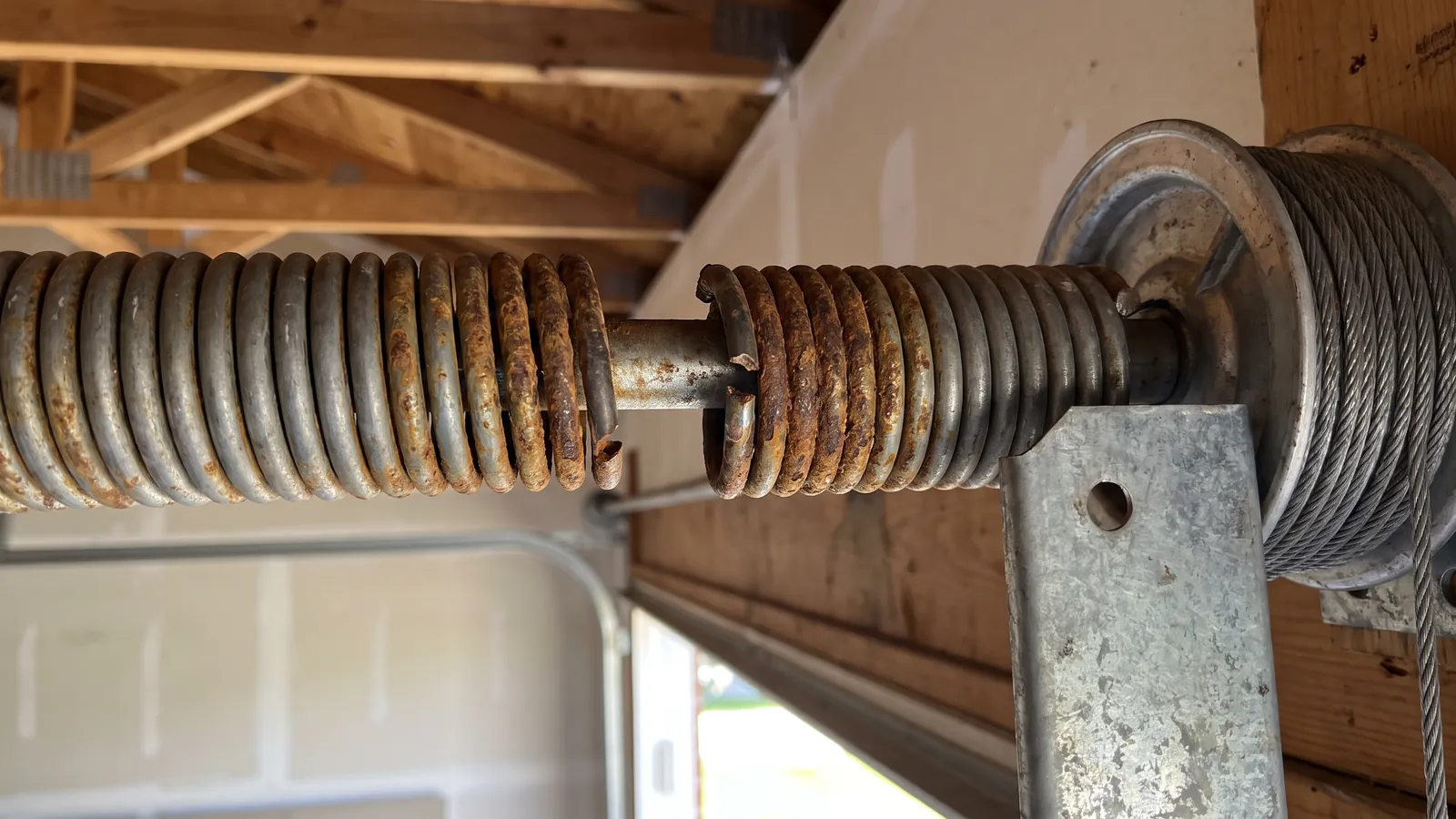
Here the checklist has a coastal page. Within a mile or so of the Indian River Lagoon, the ocean or the St. Lucie River, salt-laden air settles on every steel part in the garage, and the first signs are pitting on the spring coils, white bloom on galvanized track and orange streaks running down from the bottom brackets. Treated early, with the surface rust removed and a protective coating applied, the hardware lasts years longer. Left alone, the spring cracks at a pit, the cable parts at the bracket, and the bottom section rusts from the inside. The rust guide covers what to watch for between visits.
Timing matters too. A spring that is near the end of its cycle life gives itself away during the balance check, and replacing it in May on your schedule costs less than replacing it in September on ours. The best month for a tune-up here is between April and June, before the heat and the storm season, which is also when the My Safe Florida Home inspectors are busiest and when a rated door conversation makes the most sense.
What the visit covers
Balance check by hand
Opener released, door lifted and held at waist height; springs adjusted so the door floats rather than drops or climbs.
Lubrication done right
Rollers, hinges, bearings and spring coils treated with garage-door lubricant, never a penetrating spray, with the excess wiped so it does not collect sand.
Rust inspection and treatment
Spring coils, cables, bottom brackets and track examined for pitting; surface rust removed and coated before it becomes a failure.
Hardware tightened
Hinge bolts, track brackets and the header lag screws snugged; a loose header bracket is how a torsion bar comes down.
Seals and weather-stripping
Bottom seal and side stop molding checked for gaps that let in rain, sand and the lizards.
Opener and safety test
Travel and force limits reset, photo-eyes aligned, the contact reverse checked against a block on the floor, remotes and keypad tested.
What tune-ups and rust care runs on the Treasure Coast
| Work | Usual range | What moves it |
|---|---|---|
| Annual tune-up, one door | $99 – $179 | Includes the safety test |
| Annual tune-up, two doors at one address | $160 – $280 | |
| Rust treatment of springs, brackets and track | $80 – $160 | Where pitting has started |
| Roller set upgrade during tune-up | $140 – $260 | Sealed-bearing nylon |
| Bottom seal replacement | $60 – $130 | Supplied and fitted |
| Spring adjustment or re-tension | Included | Replacement quoted separately if needed |
Ranges are 2026 figures for St. Lucie and Martin counties, meant for budgeting. The number that counts is the one the technician writes at your house before any work begins, with parts and labor on separate lines. Quotes for new doors and openers are free and hold for 30 days.
Jobs like yours
Asked by homeowners here about tune-ups and rust care
How often should a door be tuned?
Once a year for most homes, twice a year for a door on the barrier island or right on the lagoon, where salt works faster, and for busy doors in households that open the garage ten or more times a day.
Can I lubricate it myself?
You can, with a lubricant made for garage doors, applied to rollers, hinges and the spring and wiped off. Do not use a penetrating spray; it dissolves the existing grease and the parts run dry a week later. Leave the spring tension and the cables to the technician.
What does the tune-up catch that I would miss?
A spring at the end of its life, which only shows up when the door is lifted by hand; a cable with a few broken strands at the bottom bracket; a hinge with a hairline crack; a header bracket working loose. Each of those is a cheap fix before it fails and an expensive emergency after.
My door is noisy. Will a tune-up fix that?
Usually. Most noise is dry rollers, dry hinges and a chain or belt that needs tension. If the rollers are the original steel ones, a set of sealed nylon rollers quiets the door dramatically, and the technician can fit them during the visit.
Is the rust on my track a problem?
White bloom on galvanized track is cosmetic. Orange rust at the bottom brackets, on the cable ends or on the spring coils is not, because those are the parts under load. The tune-up includes removing surface rust and coating those spots; parts that have pitted deeply are flagged for replacement.