One garage door section replaced in Port St. Lucie instead of the whole door, when the model is still made
A bumper tap, a basketball, a bike handlebar or twenty years of salt air on the bottom edge can ruin one section of a door that is otherwise fine. If the manufacturer still makes that panel, swapping it costs a fraction of a replacement door. If they do not, we say so and quote both ways.
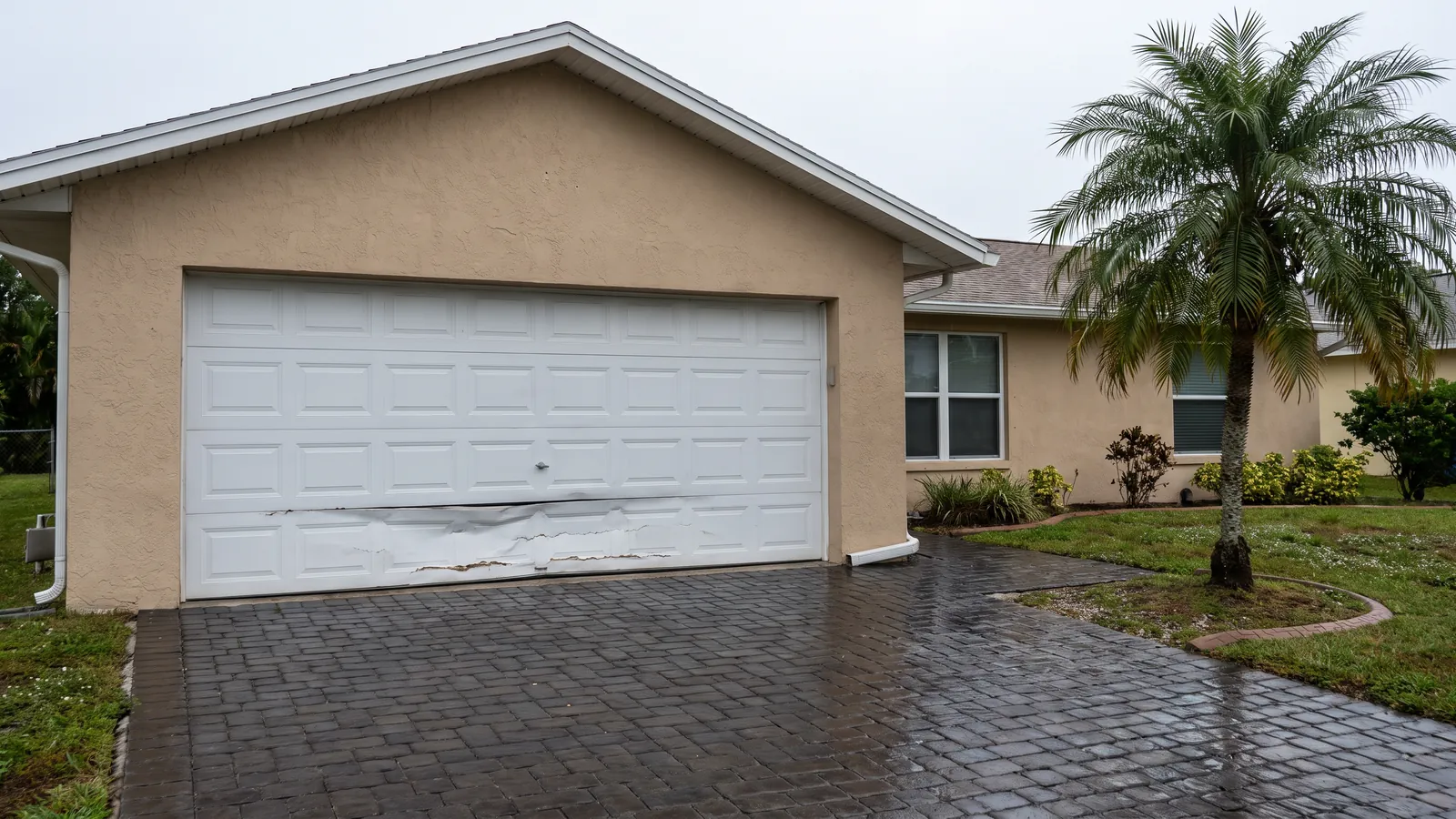
Sectional doors are built from four or five horizontal panels hinged together, and the bottom one takes nearly all the punishment. It is the one a reversing car clips, the one the lawn sprinkler soaks every morning, and on the Treasure Coast the one that rusts through from the inside along the bottom rail where salt-laden condensation sits. A creased panel changes the geometry of the whole door: rollers bind, the door sits unevenly on the slab, and the weather seal lifts at one corner. Left alone, a bent bottom section eventually cracks a hinge and pulls a roller out of the track.
Whether a single panel can be replaced comes down to two questions. Is the door model still in production, so a matching section with the same profile, embossing and window cut-outs exists? Most doors made in the last fifteen years by the major manufacturers qualify; many of the 1980s and 90s doors on the older Port St. Lucie and Fort Pierce streets do not. And is the rest of the door sound? A replacement panel on a door whose other sections are rusting along the seams is money spent twice. The technician checks the model sticker on the end stile, calls the distributor, and gives you a real answer on availability and lead time before you commit.
Color is the usual worry. A new white or almond section beside twenty-year-old panels can look a shade brighter for a season, then weathers to match. On painted doors the technician can match and paint the new section. On the newer gray and dark bronze finishes common in Tradition, a factory section in the same finish code is a near-perfect match. If the door is close to the end of its life anyway, the new door page and the repair-or-replace guide lay out the other path, and the panel quote and the door quote arrive on the same sheet so you can compare.
What the visit covers
Model identified first
The sticker on the end stile gives the make, model and finish; the technician confirms the exact section is still made before quoting it.
Factory-matched sections
Same profile, embossing, window layout and finish code as the rest of the door, ordered from the manufacturer's distributor.
Hinges, rollers and seal renewed
The hinges and rollers on the replaced section, and the bottom weather seal, are renewed as part of the job because they took the same hit.
Bottom-rail rust addressed
A rusted-through bottom section is replaced with one carrying a fresh seal retainer, and the cause, usually sprinkler spray or standing water, is pointed out.
Honest comparison to a new door
Panel price and whole-door price on the same sheet, with the age and condition of the other sections taken into account.
Rebalanced afterward
A new section can weigh slightly more or less than the old one; the springs are checked and adjusted so the door still floats.
What panel replacement runs on the Treasure Coast
| Work | Usual range | What moves it |
|---|---|---|
| Bottom section, 16-foot door, supplied and fitted | $450 – $850 | Insulated and windowed sections at the top |
| Bottom section, 8- or 9-foot door | $300 – $600 | Single-car doors |
| Middle or top section | $350 – $750 | Window sections cost more |
| Paint match on a painted door | $90 – $180 | When no factory finish exists |
| New bottom seal and retainer | $60 – $130 | Usually included with a bottom section |
| Hinges and rollers on the new section | $60 – $120 | Replaced as a set |
Ranges are 2026 figures for St. Lucie and Martin counties, meant for budgeting. The number that counts is the one the technician writes at your house before any work begins, with parts and labor on separate lines. Quotes for new doors and openers are free and hold for 30 days.
Jobs like yours
Asked by homeowners here about panel replacement
How do I know if my panel can be replaced?
Look for a sticker on the inside edge of the door, usually on the end stile of the top or bottom section, with the manufacturer, model and date. If the model is still made, a matching section almost certainly exists. The technician checks and gives you the lead time, typically one to three weeks.
Will the new panel match?
A factory section in the same finish code matches closely from day one. A new white section beside older white panels may look a touch brighter for a few months before the sun evens them out. Painted doors are matched and painted on site.
A car backed into the bottom panel. Is the door still safe to use?
Not until it is checked. A creased bottom section can bind the rollers and crack a hinge, and the lower track may be bent. Leave it down, and let the technician look at the track and hinges before the door runs again.
When does replacing one panel stop making sense?
When the door is out of production, when two or more sections are damaged, or when the other sections are rusting along the seams. At that point a panel is half the price of a new door for a fraction of the life, and we will tell you.
My bottom section is rusting from the inside. Why?
Water sits in the bottom rail, especially on doors hit by a sprinkler every morning, and the salt in our air speeds it up. A new bottom section comes with a fresh retainer and seal; moving the sprinkler head is the cheapest part of the fix.