Hurricane garage doors on the Treasure Coast: what the label means and why the door decides the roof
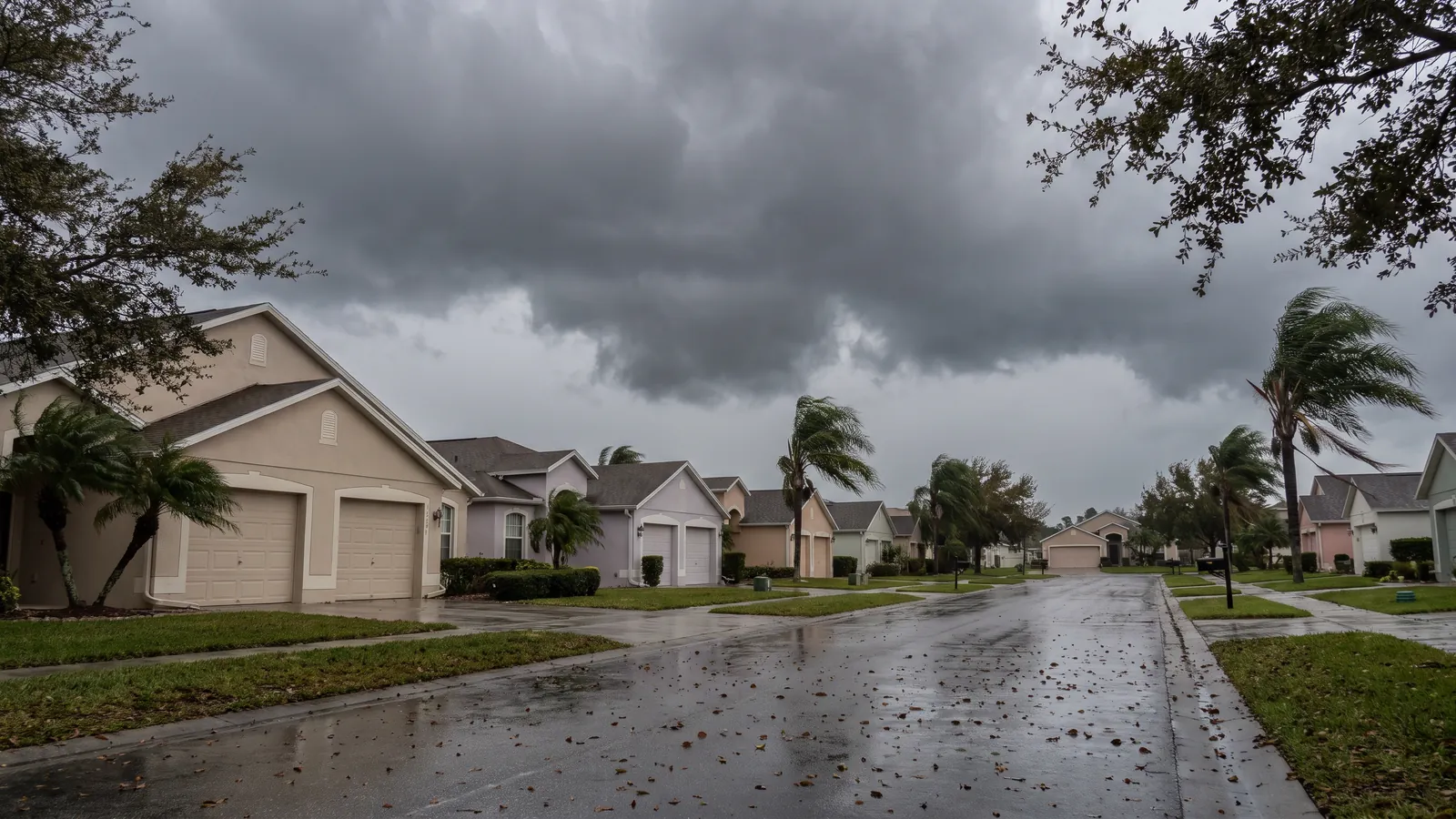
Frances and Jeanne both came ashore at the south end of Hutchinson Island in September 2004, three weeks apart, with gusts near 95 and 85 mph in Port St. Lucie and 121 mph at the Vero Beach tower. Nicole landed just north of Vero Beach in November 2022, and Milton's tornadoes tore through Spanish Lakes, Portofino Shores, Holiday Pines and Lakewood Park in October 2024. The garage door is the largest opening in almost every house they hit, and what it does in those winds decides what the rest of the house does.
The door and the roof
A garage door is the widest, thinnest panel on the house. When wind pushes it in or sucks it out, the garage fills with pressure in a fraction of a second, that pressure pushes up on the ceiling and the roof deck from below while the wind is already pulling on it from above, and the roof goes. The Insurance Institute for Business and Home Safety studied homes after major storms and found that about nine in ten whose garage door held had no structural roof damage. The door is not a convenience item in a hurricane; it is structure.
Reading the label
A rated door carries a label, usually on an end stile or the back of a section, stating a positive and a negative design pressure in pounds per square foot, the test standard, which under the residential code is ASTM E330 or ANSI/DASMA 108, and the manufacturer and model. If the door has no such label it is almost certainly unrated, which is normal for doors installed before about 2006 and for most of the original doors on the GDC-plat homes in Port St. Lucie and Fort Pierce. Do not peel or paint over the label; it is what a wind mitigation inspector, an insurer and a buyer's inspector will ask to see.
Where the number comes from
Florida's Building Code, now in its 8th edition from 2023, sets the ultimate design wind speed for each location and the exposure category for the site. The door industry's wind-load guide for the 2023 code works from the code's pressure table, Table 1609.7(1), adjusted for the door's height and the site's exposure, to give the design pressure a replacement door must meet. Port St. Lucie is not in the High-Velocity Hurricane Zone, which covers only Miami-Dade and Broward, but it sits in a high wind-speed region, and an open lot near the lagoon or the ocean is a tougher exposure than a street of houses inland. The permit for a new door states the figure for your address; treat any number quoted before the permit as an estimate.
Wind-rated and impact-rated are different things
A wind-rated door is engineered and tested to hold its design pressure: heavier gauge steel, horizontal struts, reinforced hinges and jamb brackets. It is the minimum any new door here must meet. An impact-rated door has also passed the large-missile test, a nine-pound two-by-four fired at it at about 34 mph, followed by pressure cycling, so it resists flying debris as well as wind. Impact doors cost $3,800 to $7,500 and up installed against $2,200 to $3,800 wind-rated, and they are the door insurers credit most. Neither is hurricane-proof, and nobody honest will use that word.
Bracing an existing door
Where a door is sound and a manufacturer-approved bracing kit exists for it, vertical posts and added struts can bring it to a rating for $500 to $1,200. It is a fair option on a newer unrated door; on a rusted or pre-2006 door the money belongs in a replacement. Homemade bracing with two-by-fours has no rating and earns no credit.
The money
The My Safe Florida Home program, section 215.5586 of the Florida Statutes, lists garage doors as opening protection and pays two dollars for every one the homeowner spends, up to $10,000, for an owner-occupied, site-built homestead insured for $700,000 or less with an original permit before 2008, after a program inspection within the past 24 months. Funding is set each year and the window opens and closes. Separately, a rated door documented on a wind mitigation inspection earns an opening-protection credit on the homeowners premium. Both are explained in paying for the work.
Before the next storm
Find the label, photograph it and put the photo with your insurance papers. Check that the struts are tight and the jamb brackets are lagged into solid wood or masonry, not into stucco. Make sure the opener has battery backup so the door works when the power fails, and that everyone in the house knows how to release it with the door down. If any of that turns up a problem, book a tune-up before June.
Questions on this subject
Is a wind-rated door enough, or do I need impact?
A wind-rated door at the permit's design pressure meets code and earns a credit. Impact adds debris protection and the strongest insurance position, and on an exposed lot near the water it is worth the difference. Inland in Tradition many homeowners choose wind-rated and spend the gap on battery backup and shutters.
Can an existing door be made hurricane-rated?
Sometimes, with a manufacturer-approved bracing kit on a sound, newer door. On an unlabeled pre-2006 door, no kit will carry a rating, and replacement is the honest answer.
What design pressure does my house need?
It depends on your wind-speed region, exposure and door size, and the permit states it. Treasure Coast replacement doors commonly fall in the range of plus or minus 30 to 50 psf, with higher figures on open coastal lots. Confirm the exact figure for your address with the permit.
Does a hurricane-rated door look different?
From the street, no. The difference is inside: gauge, struts, hinges, brackets and the label. Every style on the market is available rated.
Does the grant pay for the whole door?
It matches two dollars to your one up to $10,000 when funded, so a $4,500 impact door would cost the qualifying homeowner about $1,500 after reimbursement. Rules and funding change yearly; check the program's site before relying on it.
Keep reading: Impact and wind-rated doors · New door cost · Permits and licensing · Paying for the work