Garage door safety sensors fixed in Port St. Lucie so the door closes, and stops when it should
The two small eyes a few inches off the floor are the only thing standing between a closing door and a child, a pet or a bumper. When they fall out of alignment, get blinded by the sun or lose a wire, the door refuses to close from the remote. That is the system working; fixing it is usually quick.
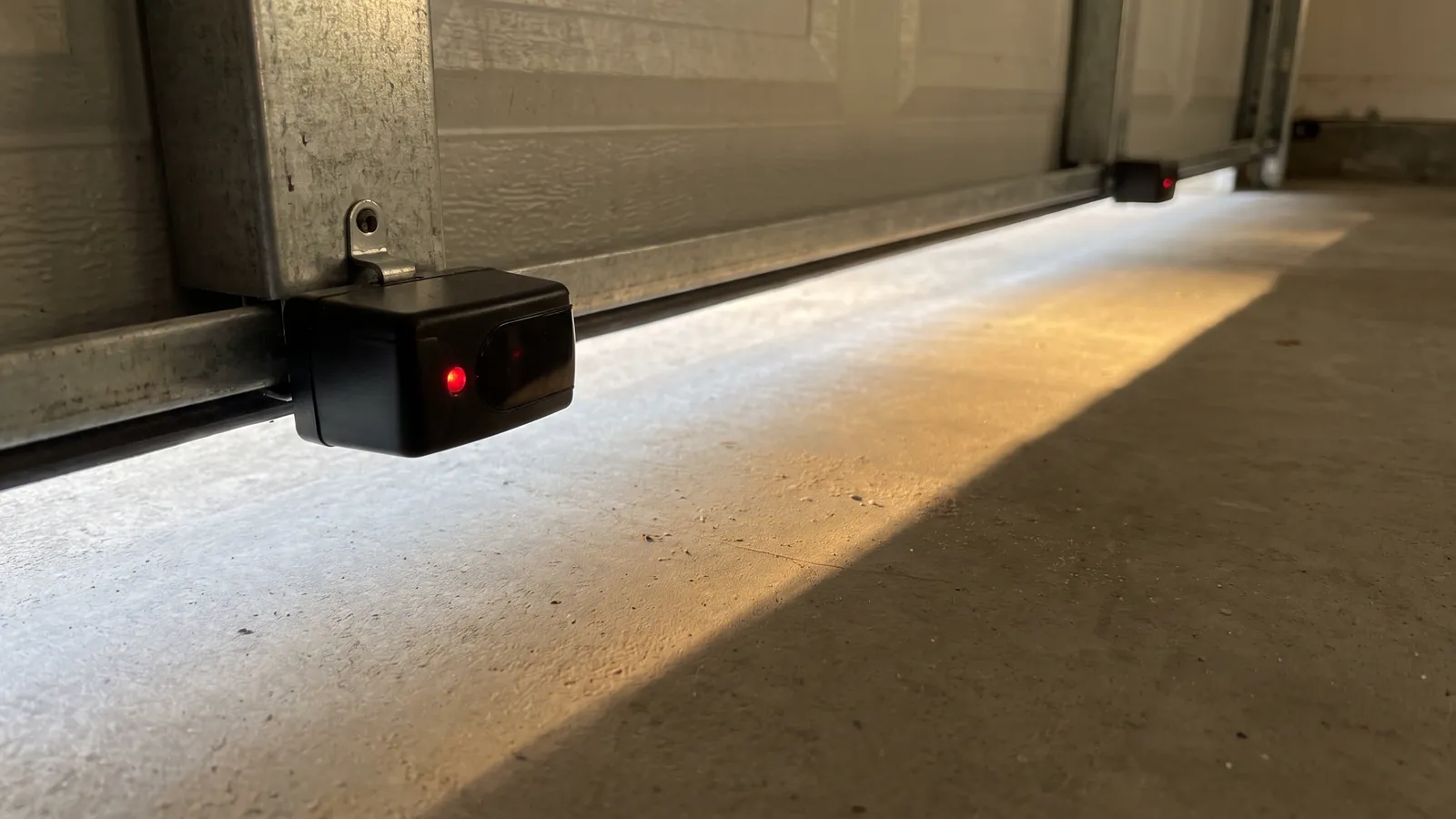
Every opener installed since 1993 has a pair of photo-eyes: a sender on one side of the door, a receiver on the other, and an invisible beam between them. Break the beam while the door is closing and it reverses. The system is deliberately cautious, so when anything degrades it, the door starts down from the remote, stops, and goes back up, with the opener light flashing. You can still close the door by holding the wall button, which bypasses the eyes, but you should not live that way, because the eyes are what make the door safe.
The Treasure Coast has its own sensor problems. West-facing garages in Tradition, St. Lucie West and the newer streets off Becker Road get low afternoon sun straight into the receiver, and the door reverses every evening between about five and sunset. A sun shield on the eye, or swapping the sender and receiver so the receiver faces east, cures it. Sprinkler spray and salt air corrode the terminals and the thin bell wire that runs up to the opener, so a sensor that worked yesterday fails after a rainy week. And a brass fitting or a bike pedal nudged against a bracket is all it takes to lose alignment; the amber light goes out and the door stays up.
The repair is one of three things. Realignment, when both eyes are healthy and simply out of line: the brackets are squared, the beam re-established, the light goes steady. Rewiring, when the bell wire has corroded, been stapled through or chewed: a new run, properly clipped. Or replacement, when an eye itself has died, which on a unit more than fifteen years old is common and cheap. Every sensor call ends with the two-by-four test, a block laid flat under the door to prove it reverses on contact, because the eyes are only half of the reversing system.
What the visit covers
Aligned and locked
Brackets squared, the beam re-established, both indicator lights steady, and the brackets tightened so a kicked bike cannot knock them out again.
Sun shields for west-facing doors
Hoods fitted to the receiving eye, or sender and receiver swapped, for the garages that reverse every evening at sunset.
Corroded wiring replaced
New low-voltage runs from the eyes to the motor head, clipped clear of the track and away from sprinkler spray.
Replacement eyes for any brand
Matching sensor pairs for LiftMaster, Chamberlain, Genie and the older brands stocked on the van.
Force and reversal tested
The contact-reverse checked with a block on the floor and the force limit set so the door stops on an obstruction, not through it.
Opener limits reset
Travel limits checked so the door does not grind the slab, which can read to the opener like a blocked beam.
What safety sensor repair runs on the Treasure Coast
| Work | Usual range | What moves it |
|---|---|---|
| Trip and diagnosis | $79 – $129 | Credited against the repair |
| Realignment and bracket tightening | $79 – $129 | Often the trip fee alone |
| Sun shield fitted or eyes swapped | $60 – $120 | West-facing garages |
| Sensor wiring replaced | $95 – $180 | Corroded or damaged runs |
| Replacement photo-eye pair | $110 – $200 | Supplied and aligned |
| Force and travel limit adjustment | Included | With any sensor repair |
Ranges are 2026 figures for St. Lucie and Martin counties, meant for budgeting. The number that counts is the one the technician writes at your house before any work begins, with parts and labor on separate lines. Quotes for new doors and openers are free and hold for 30 days.
Jobs like yours
Asked by homeowners here about safety sensor repair
The door closes from the wall button but not the remote. Why?
Holding the wall button overrides the photo-eyes, so the door closes; the remote does not override them, so the door reverses. That pattern points squarely at the sensors: alignment, sun, dirt on the lens or a wire.
One light is amber and blinking. What does that mean?
On most brands the blinking light is the receiver that cannot see the sender. The eyes are out of line, something is in the beam, or the sun is in the receiver. Check for a broom or a box first, then call if the light will not go steady.
Can I bypass the sensors for good?
No, and no reputable technician will. They are a required safety feature on every opener made since 1993, and a door that closes blind is how pets and children are hurt. Fixing the eyes is usually under $200.
Why does it only happen in the late afternoon?
Low sun. On a west-facing garage the receiver is staring into the sunset for an hour each evening and cannot pick out the sender's beam. A hood on the eye or swapping the two sides fixes it permanently.
Do you check the sensors when you do other work?
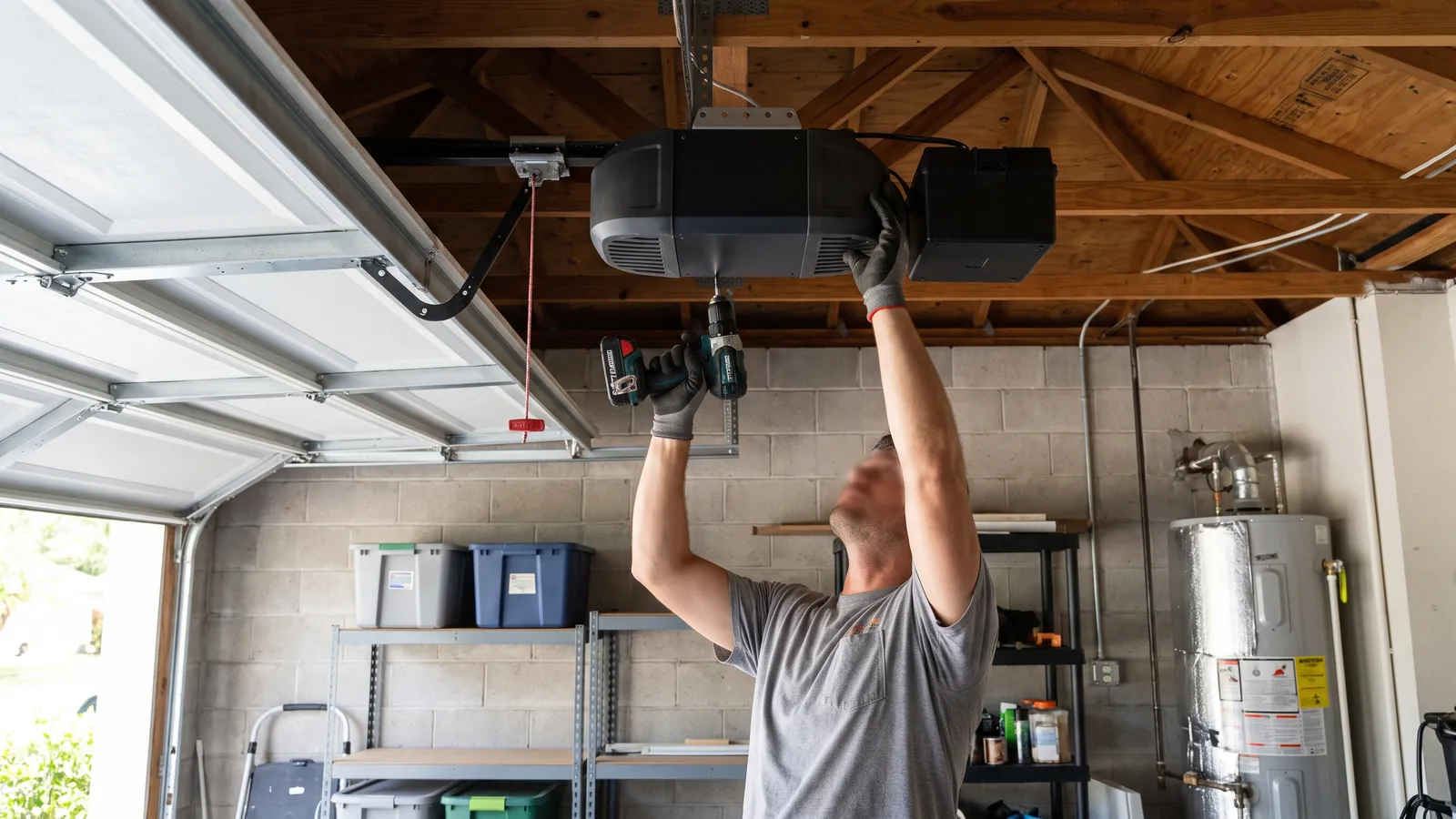
On every opener and spring job, yes. The reversing system is the thing that protects people, and it takes a minute to confirm it works before the technician leaves.